What is Gastric Sleeve Surgery?
Gastric sleeve surgery, also known as sleeve gastrectomy or vertical sleeve gastrectomy (VSG), is a minimally invasive weight-loss procedure that permanently reduces the size of your stomach by approximately 70-80 percent.
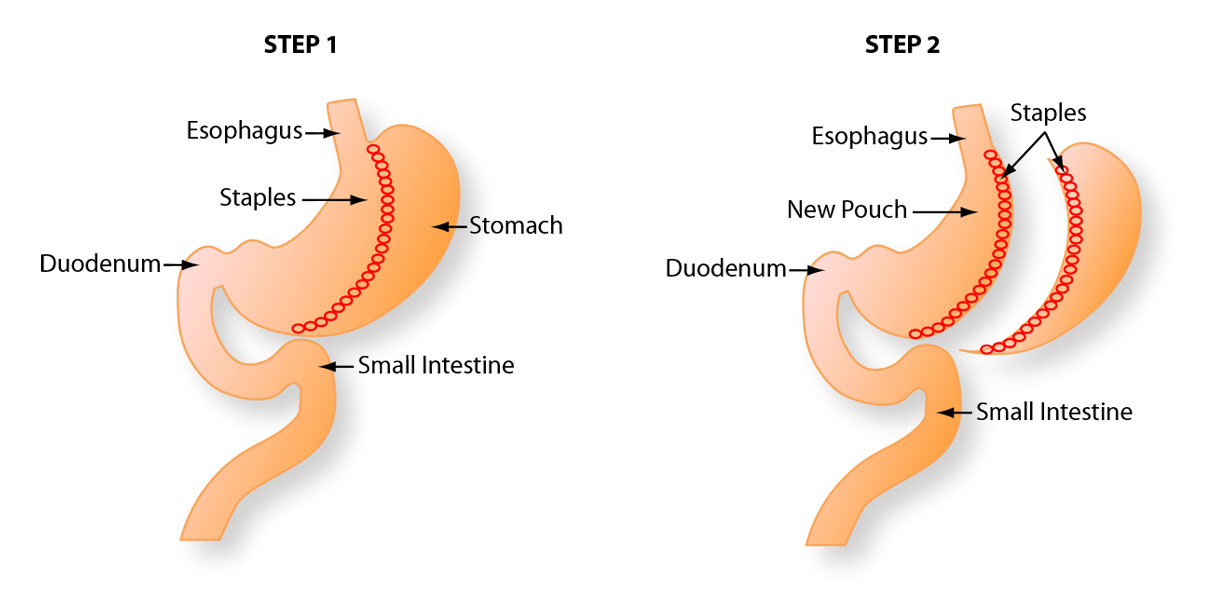
During a gastric sleeve procedure, your surgeon removes a large portion of your stomach and creates a narrow, tube-shaped or "sleeve-like" stomach that is roughly the size and shape of a banana.
Unlike other weight-loss surgery options at MemorialCare, gastric sleeve surgery does not involve rerouting or altering your intestinal tract. The procedure works through two primary mechanisms. First, it dramatically reduces the volume of food your stomach can hold at one time. Second, the surgery removes the portion of the stomach that produces ghrelin, often referred to as the "hunger hormone," which significantly reduces appetite and alters how the body responds to food. This combination helps you feel full quickly and stay satisfied longer, naturally reducing your caloric intake and promoting substantial, sustainable weight loss.
Gastric sleeve surgery is primarily used to treat severe obesity and obesity-related health conditions. This procedure may be recommended if you have a Body Mass Index (BMI) of 40 or higher, or a BMI of 35 or higher with at least one serious obesity-related health condition. We've seen how this life-changing surgery can help resolve or significantly improve numerous weight-related conditions, including:
- Type 2 Diabetes: Many patients experience remission or significant improvement in blood sugar control.
- High Blood Pressure: Weight loss often leads to a reduction in blood pressure and a decreased need for medication.
- Sleep Apnea: Significant weight loss can eliminate or reduce the severity of obstructive sleep apnea.
- Heart Disease: The procedure reduces cardiovascular risk factors.
- Fatty Liver Disease: Non-alcoholic fatty liver disease often improves dramatically.
- Joint Pain and Osteoarthritis: Reduced weight decreases stress on joints.
- GERD: Many patients experience improvement in reflux symptoms.
- Metabolic Syndrome: This cluster of conditions often resolves after surgery.
Beyond physical health improvements, gastric sleeve surgery can enhance your quality of life, mobility, mental health, and overall well-being. We understand that living with severe obesity affects every aspect of your life, and we're here to help you reclaim your health and vitality.
At MemorialCare, we offer advanced surgical approaches prioritizing your safety, comfort, and optimal outcomes:
Laparoscopic Gastric Sleeve Surgery: This minimally invasive approach involves making several small incisions (typically 4-6 incisions of about 0.5-1 inch) in the abdomen. Your surgeon inserts a laparoscope (a thin tube with a camera) and specialized surgical instruments to perform the procedure. This technique results in less pain, smaller scars, shorter hospital stays, and faster recovery compared to traditional open surgery.
Robotic-Assisted Gastric Sleeve Surgery: Using the latest robotic surgical system, our MemorialCare surgeons perform gastric sleeve procedures with enhanced precision and control. Our patients often experience less pain and scarring, shorter hospital stays, and a quicker return to normal activities with this cutting-edge approach. Learn more about robotic-assisted surgery at MemorialCare.
Procedure Details
Preparing for gastric sleeve surgery at MemorialCare involves a comprehensive process designed to ensure your safety and set you up for success. Your preparation typically begins several months before your surgery date. We'll be with you every step of the way, and our team is always available to answer your questions.
Medical Evaluation: You'll undergo a thorough evaluation, including blood work, imaging studies, cardiac assessment, and possibly a sleep study.
Nutritional Counseling: Our dedicated nutritionists will meet with you multiple times to educate you about post-surgery dietary requirements. You'll attend comprehensive preoperative education classes. The American Society for Metabolic and Bariatric Surgery also offers valuable patient resources.
Psychological Evaluation: A mental health assessment ensures you're emotionally prepared for the significant lifestyle changes required.
Pre-Surgery Diet: You'll follow a high-protein, low-calorie liquid diet for 1-2 weeks before your procedure.
Lifestyle Modifications: You'll need to stop smoking at least 4-6 weeks before surgery and discontinue certain medications as directed.
Financial Planning: Our team will help you navigate insurance authorization and understand your financial responsibility using our cost estimator tool.
On the day of your surgery, you'll arrive at the hospital for preoperative preparation. Our team will make sure you feel comfortable and address any last-minute questions. The surgical procedure typically takes 60-90 minutes and is performed under general anesthesia, meaning you'll be completely asleep and pain-free during the operation.
Your surgeon will make several small incisions in your abdomen. After inserting the laparoscope and surgical instruments, your surgeon will carefully separate your stomach from surrounding organs. Using a specialized stapling device, approximately 70-80 percent of your stomach is removed. The remaining stomach is shaped into a narrow, tubular "sleeve" about the size of a banana. Throughout the procedure, your surgical team carefully monitors your vital signs and checks the staple line for any leaks.
At MemorialCare, our highly skilled bariatric surgeons have collectively performed over 12,500 successful weight-loss surgeries, giving you access to exceptional expertise and experience. Most patients remain in the hospital for 1-2 days following surgery, and our nursing staff will ensure you're comfortable and supported during your stay.
Recovery is a gradual process that requires commitment to following your surgical team's guidelines. We know this is a significant journey, and we'll support you through every phase.
Immediate Recovery (Days 1-7): The first week focuses on rest and healing. You'll experience some pain at the incision sites, managed with prescribed medications. You'll begin walking soon after surgery to reduce the risk of blood clots. Your diet consists only of clear liquids and protein shakes during this phase.
Early Recovery (Weeks 2-4): You'll gradually progress through different diet stages (full liquids to pureed foods to soft foods) as directed by your nutritionist. You can typically return to work if you have a desk job after 2-3 weeks. You'll avoid heavy lifting (anything over 10-15 pounds) for at least 4 weeks.
Long-Term Recovery (Months 1-12 and Beyond): You'll gradually introduce solid foods, always prioritizing protein. Most patients lose the majority of their excess weight within 12 to 18 months. The MemorialCare Surgical Weight Loss Center provides ongoing support through weekly support groups, nutritional counseling, and annual follow-up visits.
An advantage of the sleeve gastrectomy is that you'll experience significant restriction immediately after surgery without manual adjustments. With our comprehensive support program, addressing your physical, psychological, and nutritional needs, you'll have everything necessary for successful and sustainable weight loss.
Risks & Benefits
Gastric sleeve surgery offers numerous life-changing benefits that extend far beyond weight loss. At MemorialCare, we've witnessed thousands of patients transform their lives through this procedure.
Significant Weight Loss: Most patients lose 60-70% of their excess body weight within the first two years, with many achieving goals within 12-18 months. The removal of ghrelin-producing stomach tissue results in reduced hunger and improved satiety, making it easier to maintain weight loss in the long term.
Health Improvements: Research shows that 60-80% of patients with type 2 diabetes experience complete remission. High blood pressure often improves or resolves entirely. Sleep apnea symptoms typically diminish or disappear, resulting in improved sleep quality. Joint pain decreases as excess weight stress is relieved.
Quality of Life: Our patients report dramatic improvements in mobility, energy levels, mental health, and self-confidence. Activities that were once difficult become enjoyable again.
Practical Advantages: Compared to gastric bypass surgery, the gastric sleeve procedure doesn't involve rerouting the intestines, which means a lower risk of nutritional deficiencies and no dumping syndrome. The minimally invasive approach involves smaller incisions, less pain, reduced scarring, and shorter hospital stays (typically 1-2 days). Our patients typically return to work within two to three weeks.
When you choose MemorialCare's Surgical Weight Loss Center at Orange Coast Medical Center, you benefit from our team's extensive experience with over 12,500 successful surgeries. We are an Accredited Metabolic and Bariatric Surgical Center, demonstrating our uncompromised commitment to quality, safety, and patient outcomes.
While generally safe and effective, it's essential to be aware of potential side effects. Being prepared helps you manage these effects and know when to contact your surgical team. Remember, we're here to support you through any challenges that arise.
Common Short-Term Side Effects: You may experience nausea and occasional vomiting as your body adjusts. Fatigue is normal during the first few weeks. Many patients experience changes in bowel habits. You may notice increased hair thinning 3-6 months after surgery due to rapid weight loss, though this is usually temporary. Some patients experience excess gas and bloating.
Dietary Adjustments: After surgery, you may find that certain foods no longer agree with you. You must eat slowly, chew thoroughly, and stop eating when you feel full to avoid discomfort.
Nutritional Considerations: You'll need lifelong vitamin and mineral supplementation to prevent deficiencies. Regular blood work and follow-up appointments with your MemorialCare team help monitor nutritional status.
Lifestyle Changes Required: The surgery is a tool, not a cure. Long-term success requires permanent lifestyle modifications, including eating smaller portions, choosing nutrient-dense foods, exercising regularly, and attending follow-up appointments and support groups. Our team offers comprehensive support to help you achieve your goals and succeed.
As with any surgical procedure, gastric sleeve surgery carries potential risks and complications. While serious complications are rare at MemorialCare, it's essential to be fully informed. We believe in transparency and want you to make the best decision for your health.
Surgical Risks: The most serious potential complication is a staple line leak, which occurs in approximately 1-3% of cases. Bleeding, blood clots, infection, and adverse reactions to anesthesia are possible but uncommon with our experienced surgical teams and advanced techniques.
Long-Term Complications: GERD can develop or worsen in some patients. A stricture, or narrowing of the stomach sleeve, can occur. Long-term vitamin deficiencies can develop without proper supplementation. Gallstones may form as a result of rapid weight loss.
Weight-Related Complications: In 20-30% of cases, procedures may not produce lasting weight loss results, and some weight regain may occur. Some patients may eventually require revision surgery.
Minimizing Your Risk: Choosing an experienced surgical center, such as MemorialCare's Accredited Center, significantly reduces your risk of complications. Our surgeons' expertise, gained from performing more than 12,500 successful procedures, combined with comprehensive care, helps ensure the best possible outcomes. We're committed to your well-being every step of the way.
Gastric sleeve surgery has an excellent success rate and is one of the most effective treatments for severe obesity and related health conditions. We're proud to share the positive outcomes our patients achieve.
Weight Loss Success: Patients typically lose 60-70% of their excess body weight within 12 to 24 months. At MemorialCare, patients in our program often meet or exceed these benchmarks due to our comprehensive support structure. Some of our patients have achieved 80% excess weight loss at just six months by staying motivated and following program guidelines.
Health Improvements: Type 2 diabetes remission occurs in 60-80% of patients. High blood pressure resolves or improves in 75-80% of patients. Sleep apnea improves or resolves in approximately 80-85% of patients. Joint pain significantly decreases in the vast majority of patients.
Long-Term Success: The long-term success depends heavily on your commitment to lifestyle changes. Patients who follow dietary guidelines, exercise regularly, take prescribed supplements, attend appointments, and participate in support groups tend to maintain better long-term weight loss. MemorialCare's comprehensive program addresses your physical, psychological, and nutritional needs through classes, counseling, weekly support groups, and annual follow-up visits.
Our bariatric surgery team has performed over 12,500 successful surgeries, giving you access to some of the most experienced specialists in Southern California. "Weight loss surgery is a valuable tool, but for long-term success, patients need a comprehensive program," explains our medical director: "We address the patient's physical, psychological, and nutritional needs through in-depth classes, counseling and group support, as well as annual visits following the procedure."
Your Next Steps with MemorialCare
Every patient's journey is unique, and your MemorialCare care team will personalize your treatment and guide you through the entire process, from initial consultation through long-term follow-up. We'll ensure you understand the risks and benefits before proceeding, and we'll be there to support you every step of the way.
Don't give up. MemorialCare is here for you, and we believe in your ability to achieve your weight loss and health goals.
Ready to take the next step? Visit our Surgical Weight-Loss page, request a consultation, or call 714-378-7622 to learn if gastric sleeve surgery is right for you.
You can also find a bariatric surgeon near you or read inspiring patient success stories to learn more about the life-changing experiences of others who have chosen MemorialCare for their weight loss journey.
FAQs about Gastric Sleeve Surgery
Yes, you'll follow a carefully structured dietary progression after surgery. You'll start with clear liquids, then advance through full liquids (weeks 1-2), pureed foods (weeks 3-4), soft foods (weeks 5-6), and finally regular solid foods (after 6-8 weeks). Long-term, you'll prioritize protein at every meal, eat slowly and chew your food thoroughly, avoid drinking with meals, and limit your intake of high-sugar and high-fat foods. Our dedicated MemorialCare nutritionists will guide you through every stage and help you develop sustainable eating habits.
No, gastric sleeve surgery is considered a permanent, irreversible procedure because a large portion of your stomach is permanently removed. This permanence is actually one of the reasons the surgery is so effective. However, if the surgery doesn't achieve the desired results, revision surgery to convert to a gastric bypass is possible. We'll work with you to determine the best path forward for your situation.
The cost varies depending on your insurance coverage, medical needs, and surgical approach. Most insurance plans cover bariatric surgery for patients who meet medical criteria. We offer a cost estimator tool that provides an estimate of your financial responsibility. Our team will work with you to navigate the insurance authorization process. Learn more about insurance and billing information on our website.
Gastric sleeve surgery permanently removes about 70-80% of your stomach without rerouting your intestines. It's purely restrictive. Gastric bypass creates a small stomach pouch and reroutes part of your small intestine, combining restriction with malabsorption. Gastric bypass typically results in slightly more weight loss but has a higher risk of nutritional deficiencies and dumping syndrome. The gastric sleeve has become increasingly popular due to its excellent results and fewer long-term complications. Your surgeon will help you determine which procedure is best. Learn more about gastric bypass surgery or explore all weight-loss surgery options.
You may be a candidate if you have a BMI of 40 or higher, or a BMI of 35 or higher with at least one serious obesity-related health condition such as type 2 diabetes, high blood pressure, sleep apnea, or heart disease. You should have attempted to lose weight through diet and exercise without lasting success, and be willing to commit to permanent lifestyle changes. The final determination is made after a comprehensive evaluation by our bariatric team, including medical assessment, nutritional counseling, and psychological evaluation. We encourage you to schedule a consultation to learn if gastric sleeve surgery is right for you.
Yes, lifelong supplementation with vitamins and minerals is essential. You'll need to take a daily bariatric multivitamin, calcium with vitamin D, vitamin B12, and possibly iron. Your MemorialCare team will provide you with specific supplementation guidelines tailored to your individual needs. Regular blood work monitors your nutritional status. Following your supplement regimen diligently prevents serious complications like anemia, osteoporosis, and neurological problems. The National Institutes of Health offers additional information about bariatric vitamin requirements.