Published on July 23, 2025
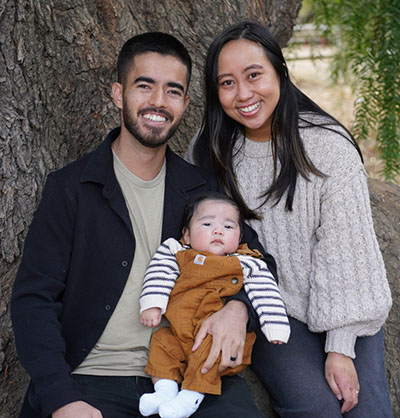
When Joann Stevi learned she was expecting her first child, she knew she wanted to give birth at The Women’s Hospital at MemorialCare Saddleback Medical Center. It had always felt like home. It’s where she and her brother were born and always felt like a comforting place for her family to receive care.
Through Preterm Birth and NICU Care
At six months pregnant, Joann toured The Women’s Hospital at Saddleback Medical Center, where she would eventually give birth. During the tour, she learned about the specialized, compassionate care provided to every patient.
A nurse guided Joann through the hospital, showcasing the large private rooms, with large windows that offer soft natural lighting in the Labor, Delivery, Recovery, and Postpartum (LDRP) suites. These suites are beautifully arranged and a stay at Saddleback Medical Center also features comforting amenities such as lavender-scented towels, freshly baked cookies, and celebratory brunches. Joann also visited one of the six LDRP suites equipped with a soaking tub for those desiring a more natural labor experience. Additional birthing resources available in the LDRP suites include peanut balls, rocking chairs, and wireless fetal monitoring to encourage mobility during labor.
"During my tour of The Women’s Hospital, I had the chance to meet the birth care team and see all that the LDRP suites have to offer, including the neonatal intensive care unit that’s just down the hall."
- Joann.
Joann’s pregnancy was progressing well under the care of Vaya Tanamai, M.D., OBGYN, MemorialCare Medical Group – Saddleback Medical Center (Women’s Health Pavilion). Everything seemed routine and without concerns. However, in an unexpected turn of events, Joann’s water suddenly broke five and a half weeks early, ahead of her original due date of Aug. 20.
A Sudden Turn of Events
“When my water broke, I immediately called the Obstetric Emergency Department for advice,” said Joann. “The LDRP nurse on the phone encouraged me to come in right away. When I arrived, Dr. Tanamai guided me through every step, detailing what they would be examining, mentioned that I might be on bed rest for two weeks, and assured me that the care team would closely monitor me, which eased my anxiety.”
Upon admission to The Women’s Hospital, Dr. Tanamai, the LDRP care team, and a maternal-fetal medicine (MFM) specialist with additional training in complex pregnancies closely monitored Joann and her soon to be born son, Luke, to ensure their health and safety. Given the high-risk nature of Joann's early labor, the team prepared for potential complications and ensured that the Level III Irma Feldcamp Neonatal Intensive Care Unit (NICU) was ready to provide specialized care for Luke if needed.
“We closely monitored Joann and Luke's health and decided to induce labor once we confirmed they were both stable,” said Dr. Tanamai. “Our priority was to ensure a safe delivery."
From the time Joann called Dr. Tanamai, to when she was admitted into The Women’s Hospital, the LDRP and NICU care team were ready and standing by to provide support to Joann and additional care to her son if needed. During the induction, Dr. Tanamai guided her through each step, while the NICU team prepared for Luke’s arrival and admission.
Specialized Care for Newborns
As a designated Level III NICU, the care team is equipped to handle the most complex and critical needs of newborns, ensuring that even the smallest patients receive the highest level of care. With a team of neonatologists, specialized NICU nurses, and support staff, the NICU offers around-the-clock care, advanced medical technology, and a compassionate environment, giving families peace of mind.
Assisting with Dr. Tanamai with Joann’s delivery was Daniel Sternfeld M.D., another OBGYN with MemorialCare Medical Group at the Women’s Health Pavilion. As Joann was delivering Luke, Joann required additional assistance to bring Luke into the world. Dr. Tanamai and Dr. Sternfeld, together, helped safely deliver Joann’s son Luke.
Luke’s Arrival
After three hours of pushing, Luke was born.
“When Luke was first born, he didn’t cry,” Joann recalls. “But then, as soon as the NICU team held him, Matt heard his first cry, which brought us immense peace and relief. When they placed him on my chest and our eyes met, I knew in that moment that he was going to be okay.”
Luke was born on July 12, just under five pounds. Shortly after holding him, the NICU team admitted him into the NICU and started caring for him. Although he appeared stable at birth, his development still had a long way to go. His lungs needed more time to develop, he showed signs and required additional care for jaundice, and he needed time to learn how to suck and swallow. Although these signs can be alarming for a new parent, Joann felt secure knowing that he had an incredible care team, which included respiratory therapists, occupational therapists, nutritionists, neonatologists, and specialized NICU nurses, watching over him and caring for him constantly.
“Seeing Luke in the NICU was jarring,” says Joann. “The care team prepared me as best they could, but seeing it was different. The nurses understood this and supported me throughout Luke’s hospitalization.”
Care Beyond the Baby
The NICU care team didn’t just care for Luke – they also cared for Joann and her husband, Matt. Joann and Matt were guided through every step of Luke’s treatment and included in his care during his time in the NICU. The Women’s Hospital approach is grounded in family-integrated care, encouraging parents to be actively involved in their baby’s care and progress. When Joann and Matt would visit Luke, the NICU care team would help place Luke on their bare chest to practice skin-to-skin care, which helps stabilize the baby’s heart rate and breathing, and enhances bonding and breastfeeding. That involvement helped make Joann and Matt feel supported and cared for during a time when most new parents feel frightened.
Luke was in the NICU for 11 days. During that time, he made progress in breathing, bilirubin levels, and eating on his own. The NICU care team celebrated each win, offered reassurance, and guided Joann through early motherhood.
“When I visited Luke and he could suck and swallow, we practiced breastfeeding and pumping,” says Joann. “The support from the lactation consultant at The Women’s Hospital made me feel confident in caring for my son.”
Expert Lactation Consultants
All lactation consultants at The Women’s Hospital, are registered nurse, international board-certified lactation consultants (IBCLC), which is the gold standard in lactation care, offering families the highest level of expertise and support. They are here to support and educate both mom and baby, teaching invaluable breastfeeding techniques and providing much-needed reassurance. Every mom who delivers at The Women’s Hospital has access to these dedicated consultants for both in-hospital and outpatient consultations. Plus, The Women’s Hospital offers breastfeeding classes where moms and dads can learn about positioning, feeding techniques, and how to tackle any breastfeeding challenges together – ensuring every family feels confident and supported on their breastfeeding journey.
Staying Connected
When Joann wasn’t at the hospital, she found comfort in NICVIEW, a webcam attached to the crib that allows 24/7 streaming through private log-in. This technology enables parents to stay connected to their little ones at home. Joann and Matt watched Luke from a secure camera feed connected to his crib, bringing them comfort to see their son anytime.
“I cherished being able to watch Luke even when I wasn’t at the hospital,” recalls Joann. “Seeing him on camera was incredibly comforting, especially on days when it was difficult to leave him.”
For Joann, the most profound part of the experience wasn’t just the care Luke received – it was the love that surrounded him while he developed and grew.
“I am grateful for how things worked out and thankful to the NICU team that cared for him. You could tell the nurses and doctors loved him so much. I will never forget them.”
- Joann
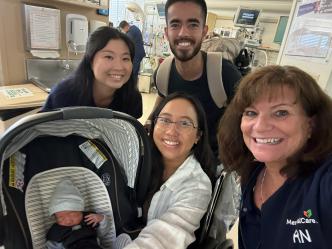
Today, Luke is healthy, active, and thriving at home. Looking back, Joann sees her NICU experience not as a challenge, but as a blessing.
“Although Luke’s delivery was tough, I would do it ten times over with my care team at The Women’s Hospital,” recalls Joann. “When you have the right team, it’s easy to trust them to see you through every part of your care.”